

Description
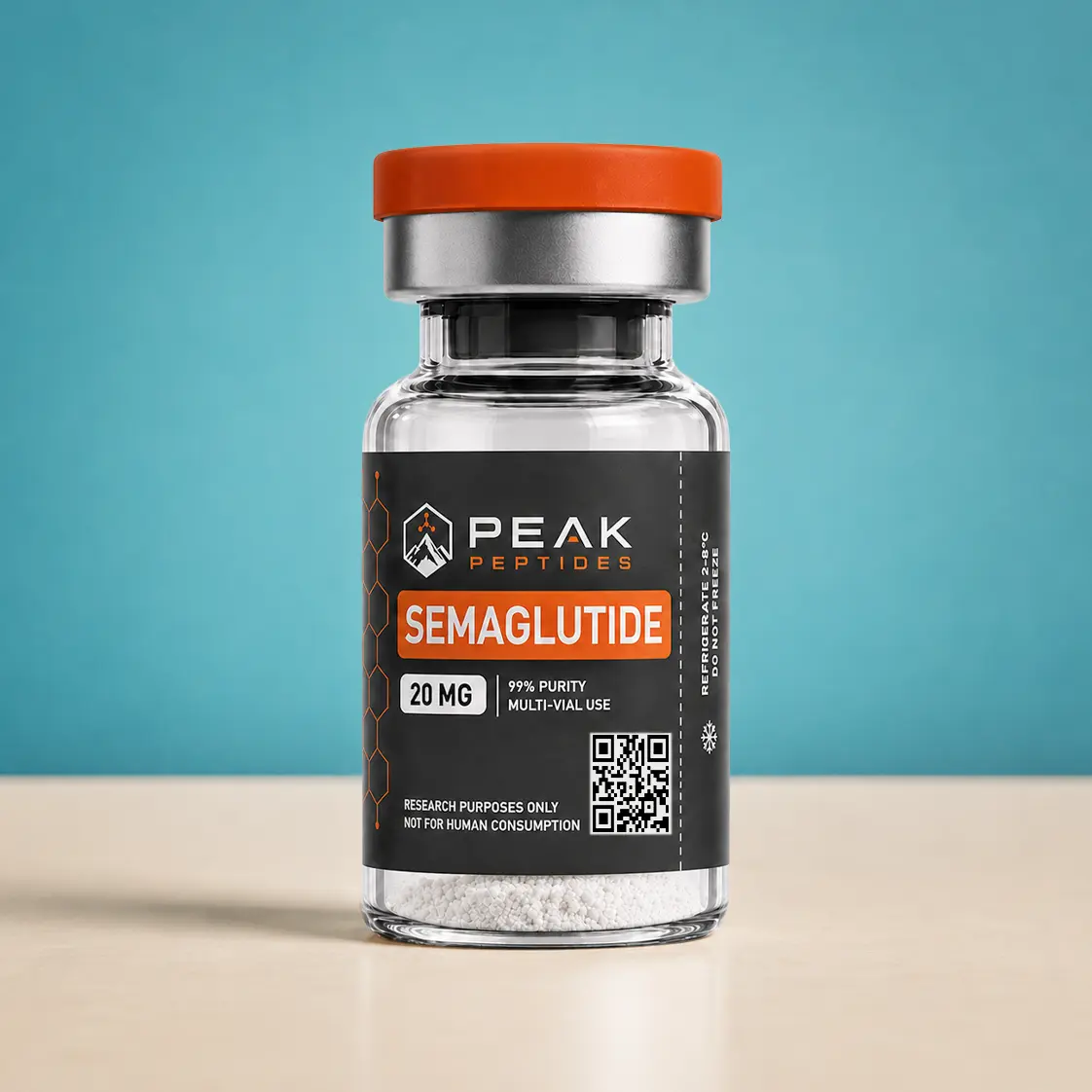
Semaglutide 20mg Research Material
Semaglutide 20mg is a synthetic glucagon-like peptide-1 (GLP-1) analogue supplied as a defined research material for controlled laboratory and analytical investigation.
Semaglutide shares approximately 94% sequence homology with human GLP-1 while incorporating molecular modifications that influence its stability, receptor activity, and interaction with albumin.
These characteristics make semaglutide a well-characterized reference compound for scientific investigation of GLP-1 receptor pharmacology, incretin-associated signaling, ligand-receptor interactions, and related metabolic pathways.
Compound: Semaglutide
Research Quantity: 20mg
Research Classification: GLP-1 Receptor Agonist / GLP-1 Analogue
Primary Molecular Target: GLP-1 Receptor
Research Focus: Receptor signaling, incretin biology, metabolic pathways, peptide stability, and molecular-response research
GLP-1 Receptor Research
GLP-1 is an endogenous signaling peptide associated with a specialized G-protein-coupled receptor known as the GLP-1 receptor. Activation of this receptor initiates a network of downstream molecular signaling events that remain an important area of metabolic and biochemical research.
Semaglutide selectively interacts with the GLP-1 receptor, making it relevant to laboratory studies examining receptor pharmacology, ligand-receptor interactions, intracellular signaling, and incretin-associated molecular pathways.
Semaglutide 20mg provides a defined research format for studying prolonged GLP-1 receptor activation, comparative peptide behavior, intracellular signaling, and the relationship between molecular structure and receptor response.
Why Semaglutide Is Scientifically Interesting
Native GLP-1 is rapidly degraded through enzymatic processes. Semaglutide incorporates structural modifications that increase resistance to degradation while promoting association with albumin.
From a research perspective, these characteristics make semaglutide particularly useful for studying how molecular modifications can alter peptide stability, receptor binding, signaling duration, and pharmacological behavior.
Scientific investigation of semaglutide spans GLP-1 receptor biology, incretin signaling, metabolic pathway analysis, comparative peptide pharmacology, and broader receptor-response mechanisms.
Research Applications
Semaglutide 20mg may serve as a research material within appropriately designed laboratory studies investigating GLP-1 receptor biology, ligand-receptor interactions, biochemical signaling pathways, comparative peptide analysis, and associated metabolic mechanisms.
Experimental interpretation should account for factors including assay design, model selection, material characterization, laboratory conditions, and analytical methodology.
This material is offered exclusively for laboratory, analytical, and scientific research purposes. Product information is provided for compound identification and scientific reference only and does not constitute medical, therapeutic, diagnostic, or administration information.