

Description
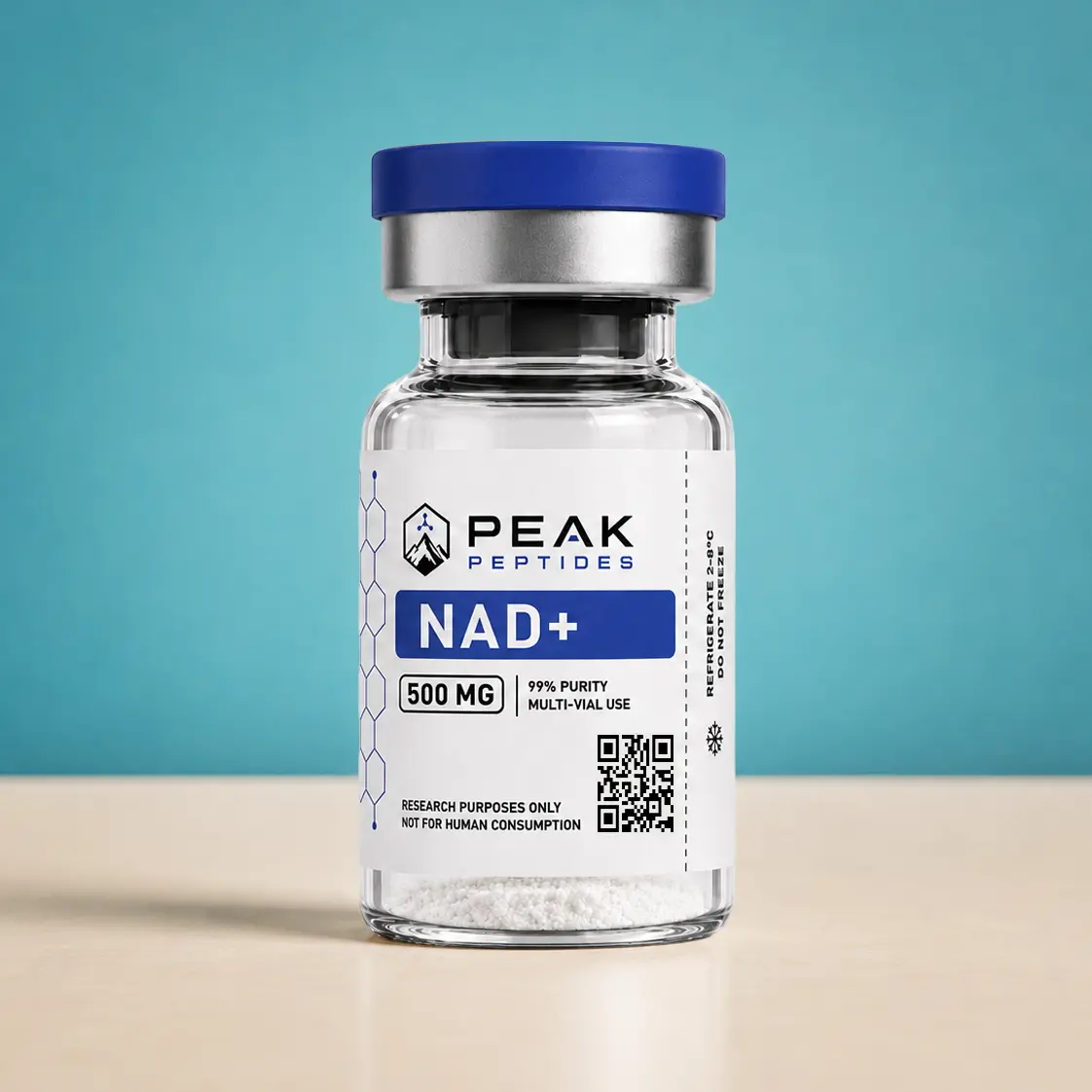
NAD+ 500mg Research Material
NAD+ 500mg is nicotinamide adenine dinucleotide supplied as a defined research material for controlled laboratory and analytical investigation of cellular energy metabolism, redox reactions, enzymatic activity, and NAD+-dependent molecular pathways.
NAD+ is an essential biological cofactor involved in numerous oxidation-reduction reactions. Through reversible conversion between its oxidized NAD+ and reduced NADH states, the molecule participates in electron-transfer processes fundamental to cellular biochemistry.
Beyond its role in redox chemistry, NAD+ is also investigated as a substrate for several enzyme families involved in molecular signaling, protein modification, DNA-associated processes, and cellular metabolic regulation.
Compound: Nicotinamide Adenine Dinucleotide (NAD+)
Research Quantity: 500mg
Research Classification: Biological Cofactor / Redox Coenzyme
Associated Redox Pair: NAD+ / NADH
Research Focus: Cellular metabolism, redox biology, mitochondrial pathways, enzymatic reactions, and NAD+-dependent molecular signaling
Cellular Energy & Redox Research
NAD+ occupies a central position in cellular redox chemistry. Its ability to accept and transfer electrons allows the NAD+/NADH system to participate in biochemical reactions connecting nutrient metabolism with cellular energy pathways.
Laboratory research involving NAD+ encompasses glycolytic pathways, mitochondrial metabolism, oxidative phosphorylation, redox balance, and enzymatic electron-transfer reactions, making it an important reference molecule across biochemical and cellular research.
NAD+ 500mg provides a defined research format for investigating cellular redox chemistry, mitochondrial metabolism, NAD+-dependent enzymatic reactions, energy-associated pathways, and relationships between metabolic state and molecular signaling.
Why NAD+ Is Scientifically Interesting
NAD+ is scientifically significant because it participates in both fundamental metabolic chemistry and specialized molecular signaling. This dual role creates a connection between cellular energy state and numerous enzyme-mediated processes.
NAD+ is utilized by enzyme systems including sirtuins, poly(ADP-ribose) polymerases (PARPs), and other NAD+-dependent enzymes. These systems are studied in connection with protein modification, cellular signaling, genomic maintenance, and metabolic regulation.
The relationship between NAD+ availability, redox state, mitochondrial activity, and enzyme function makes this molecule relevant to research spanning biochemistry, molecular biology, cellular metabolism, and mitochondrial science.
Research Applications
NAD+ 500mg may serve as a research material within appropriately designed laboratory studies examining redox chemistry, cellular metabolism, mitochondrial pathways, NAD+-dependent enzymes, biochemical signaling, and comparative metabolic analysis.
Experimental interpretation should account for factors including assay design, material characterization, experimental model, oxidation state, sample preparation, laboratory conditions, and analytical methodology.
This material is offered exclusively for laboratory, analytical, and scientific research purposes. Product information is provided for compound identification and scientific reference only and does not constitute medical, therapeutic, diagnostic, or administration information.