

Description
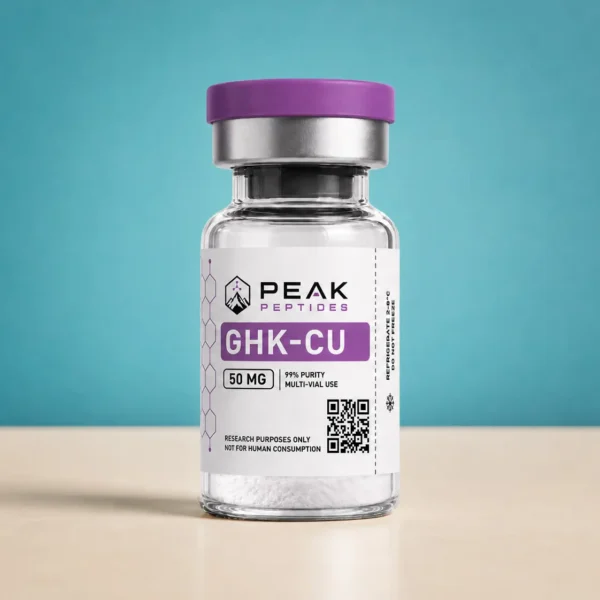
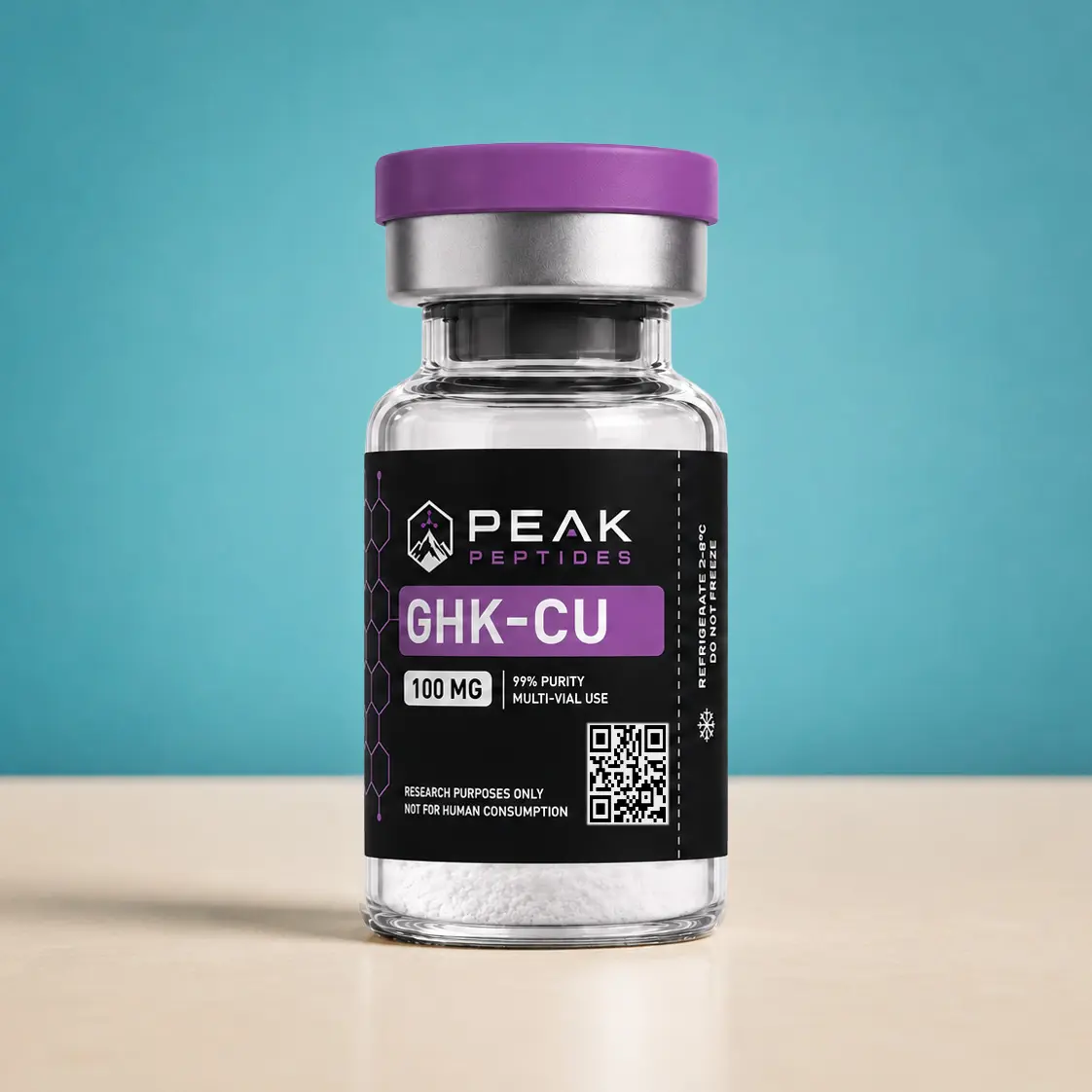
GHK-Cu 100mg Research Material
GHK-Cu 100mg is the copper complex of the naturally occurring tripeptide glycyl-L-histidyl-L-lysine (GHK). It is supplied as a defined research material for controlled laboratory and analytical investigation of copper-peptide interactions and associated molecular pathways.
GHK possesses a strong affinity for copper(II) ions, forming the complex commonly referred to as GHK-Cu. This interaction has generated substantial scientific interest in the relationship between metal-ion coordination, peptide signaling, extracellular matrix biology, and cellular responses.
The compound has consequently become an established subject of laboratory research examining peptide biochemistry, gene-expression patterns, cellular signaling, matrix-associated processes, and the broader molecular biology of copper-binding peptides.
Compound: GHK-Cu
Research Quantity: 100mg
Research Classification: Copper-Binding Tripeptide Complex
Molecular Components: Glycyl-L-Histidyl-L-Lysine & Copper(II)
Research Focus: Copper-peptide interactions, cellular signaling, extracellular matrix biology, gene-expression pathways, and peptide biochemistry
Copper-Peptide Research
Copper is an important transition metal in biological chemistry and participates in numerous molecular processes through interactions with proteins, peptides, and enzymes. GHK provides an interesting research model because its amino-acid sequence forms a coordination complex with copper ions.
Laboratory investigation of GHK-Cu has therefore explored metal-peptide coordination, cellular signaling, extracellular matrix-associated pathways, gene-expression patterns, and molecular responses to copper-binding peptide complexes.
GHK-Cu 100mg provides a defined research format for investigating copper-peptide coordination, cellular and molecular signaling, extracellular matrix-associated processes, gene-expression pathways, and relationships between peptide structure and biological response in experimental models.
Why GHK-Cu Is Scientifically Interesting
GHK-Cu is notable because it combines a small naturally occurring peptide with a biologically relevant metal ion. This creates a useful system for examining how metal coordination can influence peptide chemistry and downstream molecular interactions.
Research involving GHK-Cu has examined areas including extracellular matrix components, cellular migration models, oxidative-response pathways, gene expression, and signaling associated with tissue remodeling. These diverse areas make the complex particularly interesting within peptide and molecular biology research.
Its compact three-amino-acid structure also makes GHK useful for investigating fundamental relationships between peptide sequence, metal binding, molecular stability, and cellular response.
Research Applications
GHK-Cu 100mg may serve as a research material within appropriately designed laboratory studies investigating copper-peptide chemistry, extracellular matrix biology, cellular signaling, gene-expression pathways, peptide-metal interactions, and comparative molecular analysis.
Experimental interpretation should account for factors including assay design, experimental model, copper availability, material characterization, laboratory conditions, and analytical methodology.
This material is offered exclusively for laboratory, analytical, and scientific research purposes. Product information is provided for compound identification and scientific reference only and does not constitute medical, therapeutic, diagnostic, or administration information.