

Description
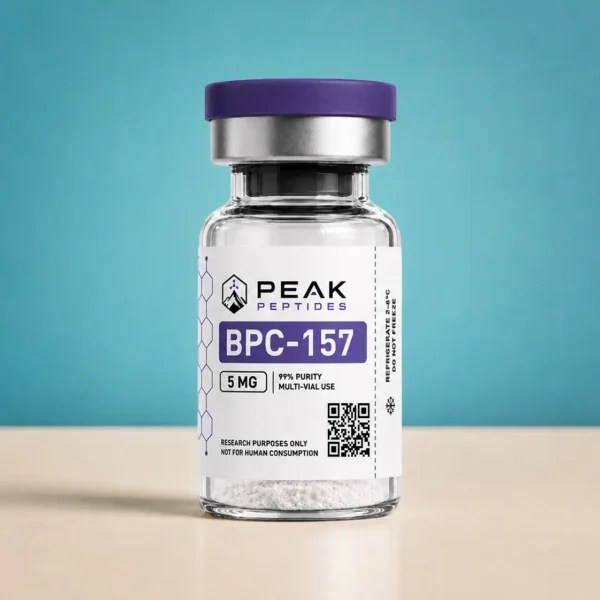
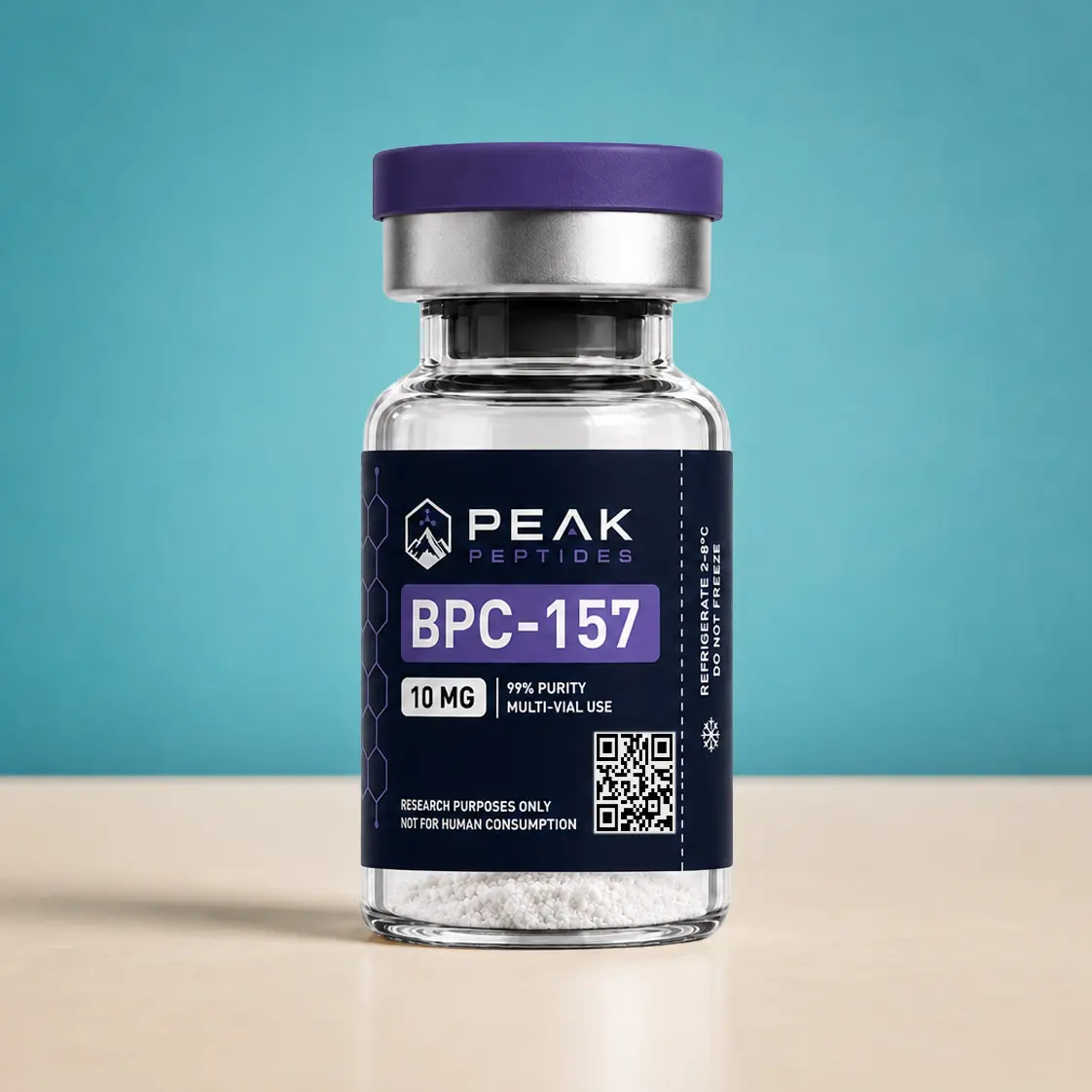
BPC-157 10mg Research Material
BPC-157 10mg is a synthetic 15-amino-acid peptide supplied as a defined research material for controlled laboratory and analytical investigation. BPC-157 has been examined primarily in preclinical experimental systems involving cellular signaling, vascular-response pathways, and tissue-associated molecular processes.
The peptide is commonly described by the sequence Gly-Glu-Pro-Pro-Pro-Gly-Lys-Pro-Ala-Asp-Asp-Ala-Gly-Leu-Val. Its relatively compact structure has made it a subject of experimental research into peptide stability, molecular interactions, and signaling behavior across a variety of laboratory models.
Scientific literature surrounding BPC-157 is largely preclinical. Research has explored interactions involving angiogenesis-associated signaling, nitric-oxide-related pathways, cellular migration, and molecular processes associated with experimental tissue models.
Compound: BPC-157
Research Quantity: 10mg
Research Classification: Synthetic 15-Amino-Acid Peptide
Peptide Length: 15 Amino Acids
Research Focus: Cellular signaling, angiogenesis-associated pathways, nitric oxide signaling, cellular migration, and experimental tissue models
Cellular & Molecular Pathway Research
BPC-157 has attracted scientific interest because experimental studies have reported activity across several interconnected molecular systems rather than identifying a single established receptor as its exclusive target. This creates a broad area for mechanistic investigation.
Preclinical research has examined relationships involving vascular signaling, nitric-oxide-associated mechanisms, growth-factor-related pathways, cellular migration, and molecular responses within experimental tissue models. The precise mechanisms underlying reported observations remain an active area of investigation.
BPC-157 10mg provides a defined research format for investigating peptide-associated cellular signaling, angiogenesis models, cellular migration, nitric-oxide-related pathways, peptide stability, and molecular-response mechanisms under controlled experimental conditions.
Why BPC-157 Is Scientifically Interesting
One scientifically interesting feature of BPC-157 is the range of molecular pathways investigated in experimental models. Rather than functioning simply as a conventional ligand for one well-characterized receptor system, its research profile spans several areas of cellular and molecular biology.
Research questions have included peptide stability, vascular-response signaling, cell migration, growth-factor-associated pathways, and interactions with nitric-oxide-related mechanisms. Studying these systems may help characterize how short synthetic peptides influence complex cellular signaling networks.
Because much of the published investigation remains preclinical, BPC-157 is particularly suited to carefully controlled experimental research focused on mechanism, reproducibility, and molecular characterization.
Research Applications
BPC-157 10mg may serve as a research material within appropriately designed laboratory studies examining peptide-associated signaling, cellular migration, angiogenesis models, nitric-oxide-associated pathways, comparative peptide analysis, and experimental molecular-response systems.
Experimental interpretation should account for factors including assay design, model selection, material characterization, peptide stability, laboratory conditions, and analytical methodology.
This material is offered exclusively for laboratory, analytical, and scientific research purposes. Product information is provided for compound identification and scientific reference only and does not constitute medical, therapeutic, diagnostic, or administration information.