

Description
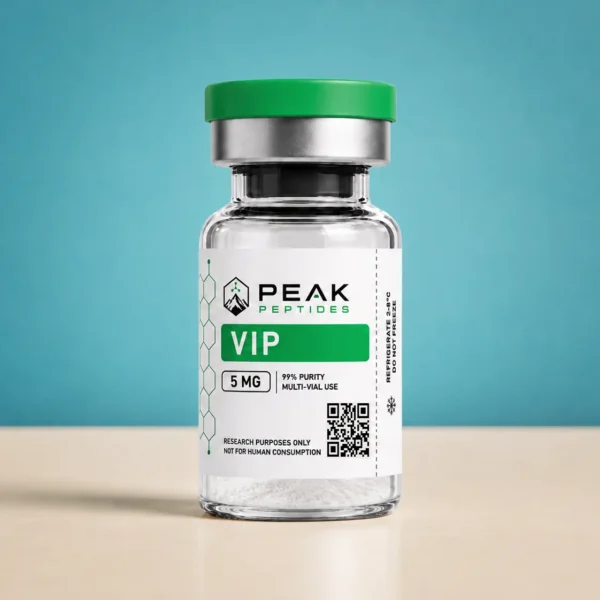
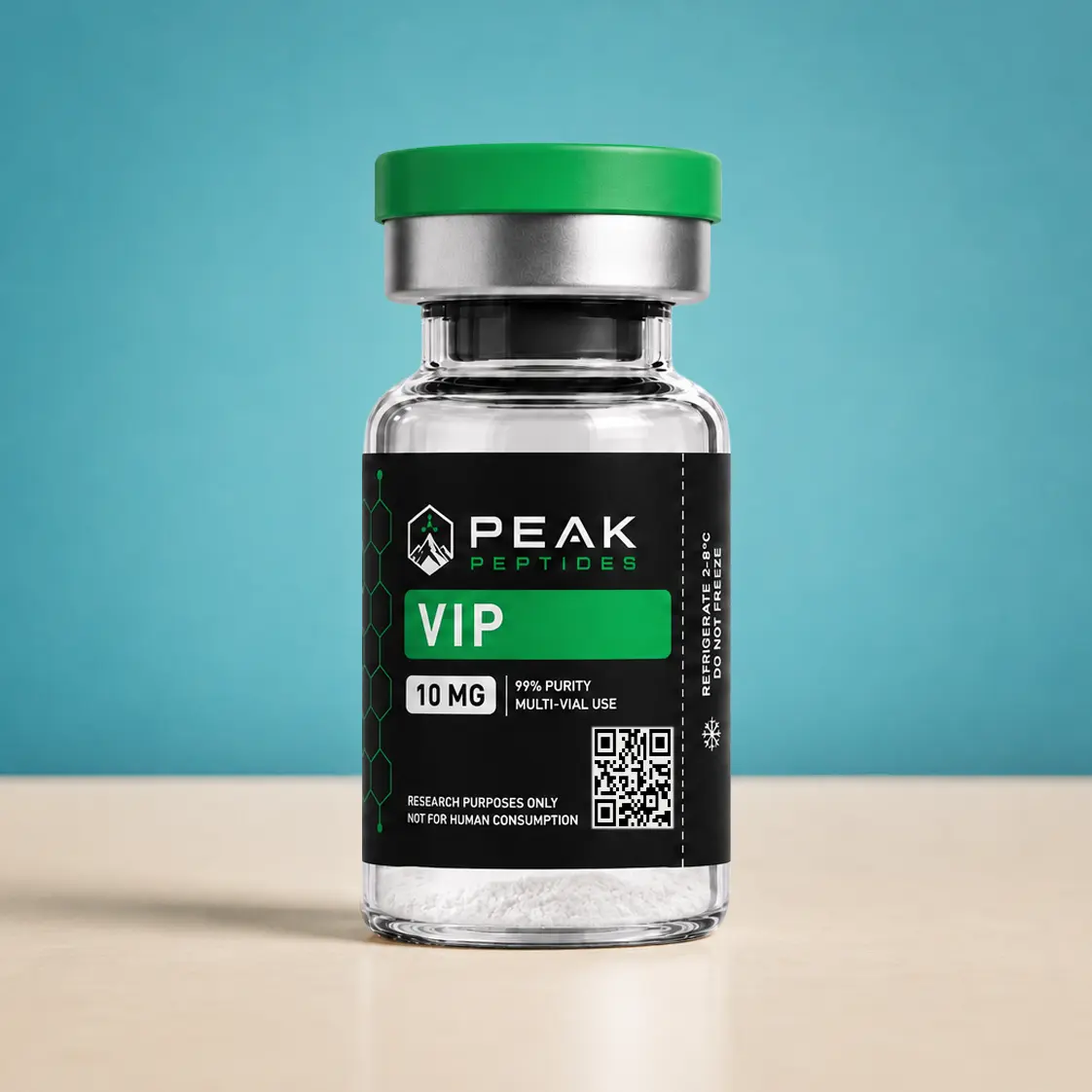
VIP 10mg Research Material
VIP 10mg is a synthetic form of vasoactive intestinal peptide (VIP), a 28-amino-acid signaling peptide supplied as a defined research material for controlled laboratory and analytical investigation of peptide-receptor interactions and cellular signaling pathways.
Vasoactive intestinal peptide belongs to the secretin/glucagon family of peptide signaling molecules and interacts principally with the VPAC1 and VPAC2 receptors. These receptors belong to the G-protein-coupled receptor family and provide established molecular systems for investigating peptide-mediated cellular communication.
VIP-related laboratory research encompasses receptor pharmacology, cyclic-AMP-associated signaling, intracellular communication, peptide structure-function relationships, and comparative investigation of neuropeptide signaling systems.
Compound: Vasoactive Intestinal Peptide (VIP)
Research Quantity: 10mg
Research Classification: 28-Amino-Acid Neuropeptide
Primary Molecular Targets: VPAC1 & VPAC2 Receptors
Research Focus: VPAC receptor signaling, cyclic-AMP pathways, peptide-receptor interactions, cellular communication, and neuropeptide biology
VPAC Receptor Research
VPAC1 and VPAC2 are G-protein-coupled receptors that participate in peptide-mediated signaling networks. Their interaction with VIP provides a well-characterized experimental system for investigating receptor activation and downstream intracellular communication.
VIP receptor research commonly examines ligand-receptor binding, adenylate cyclase activity, cyclic-AMP signaling, receptor selectivity, and downstream molecular-response pathways. These mechanisms make the VIP/VPAC system relevant to biochemical and molecular signaling research.
VIP 10mg provides a defined research format for investigating VPAC1 and VPAC2 receptor pharmacology, cyclic-AMP-associated signaling, peptide-receptor interactions, intracellular communication, and relationships between neuropeptide structure and molecular response.
Why VIP Is Scientifically Interesting
VIP is scientifically interesting because a single peptide ligand can participate in signaling through multiple related receptor subtypes. This creates opportunities for comparative investigation of receptor selectivity, downstream signaling, and structure-function relationships.
The VIP/VPAC system has been examined in research involving receptor pharmacology, second-messenger signaling, cellular communication, peptide stability, and molecular-response mechanisms. Differences between VPAC1 and VPAC2 signaling provide additional variables for controlled experimental analysis.
VIP therefore provides a useful molecular model at the intersection of peptide chemistry, receptor biology, neuropeptide signaling, and intracellular signal-transduction research.
Research Applications
VIP 10mg may serve as a research material within appropriately designed laboratory studies investigating VPAC receptor biology, ligand-receptor interactions, cyclic-AMP signaling, comparative receptor pharmacology, neuropeptide signaling, and peptide structure-function relationships.
Experimental interpretation should account for factors including assay design, receptor subtype expression, experimental model, material characterization, peptide stability, laboratory conditions, and analytical methodology.
This material is offered exclusively for laboratory, analytical, and scientific research purposes. Product information is provided for compound identification and scientific reference only and does not constitute medical, therapeutic, diagnostic, or administration information.